

20 Years Ago This Week
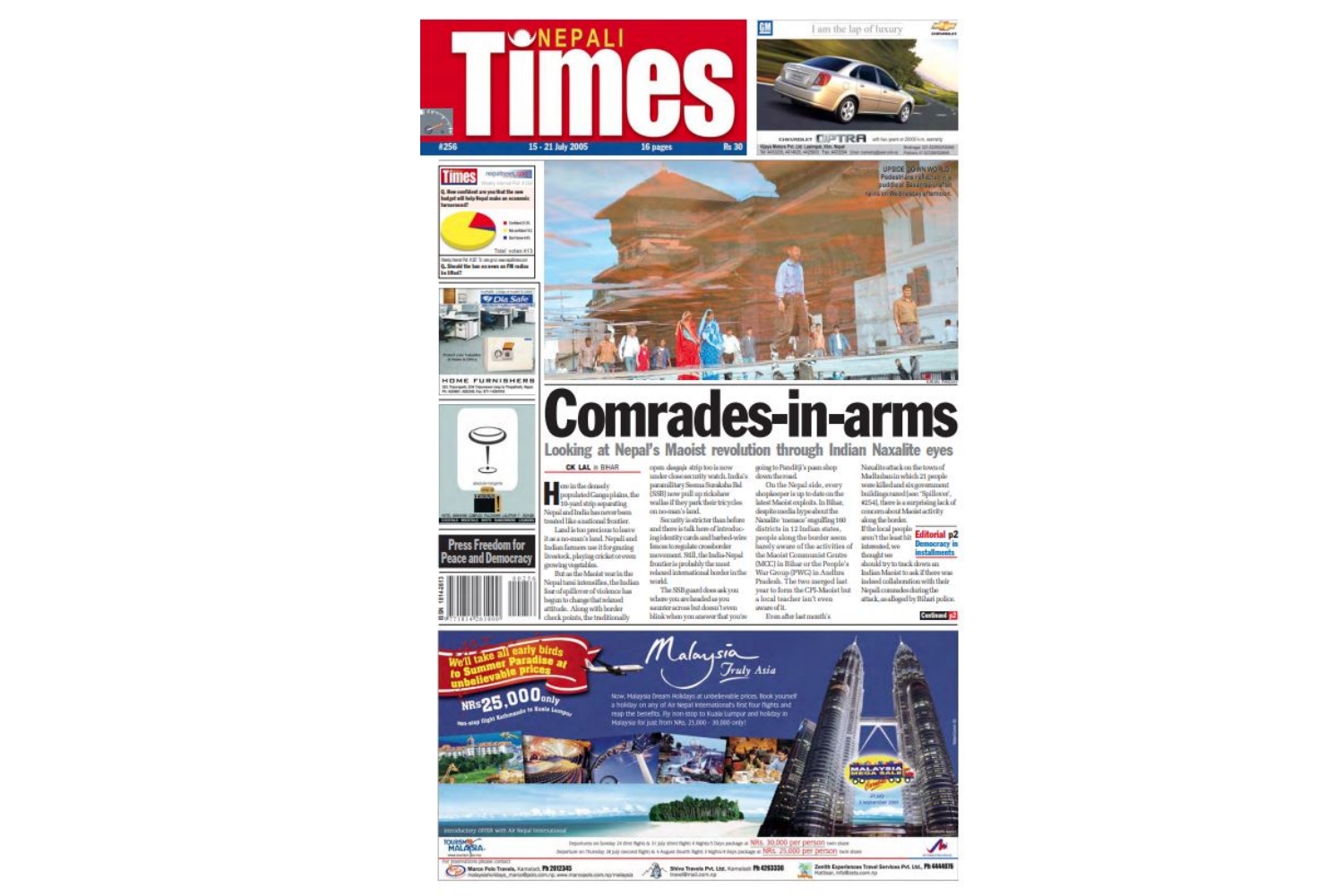
Malnutrition
Twenty years ago this week, we reported about how malnutrition was indirectly responsible for 70% of all child mortality in Nepal, and how…
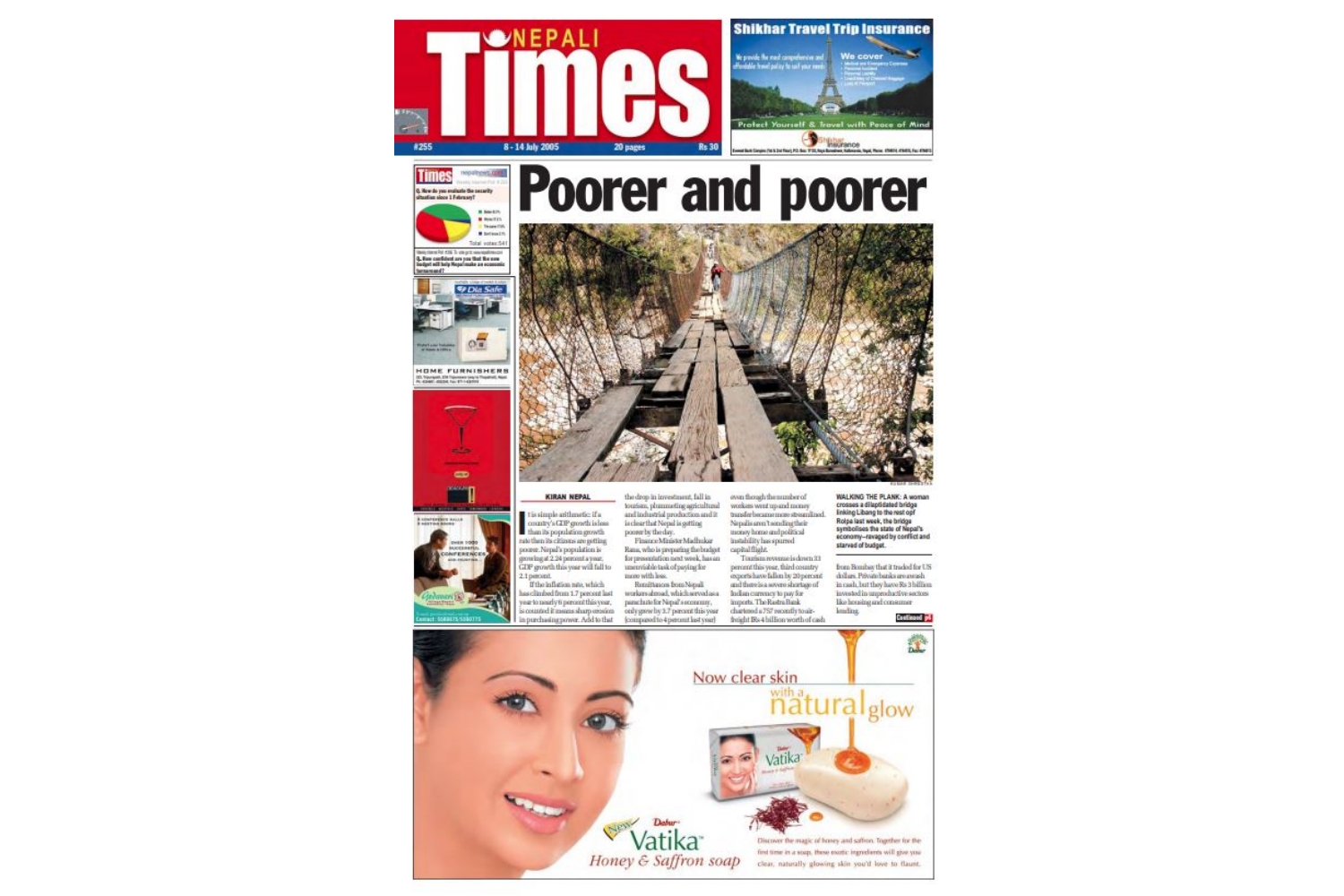
Then, and now
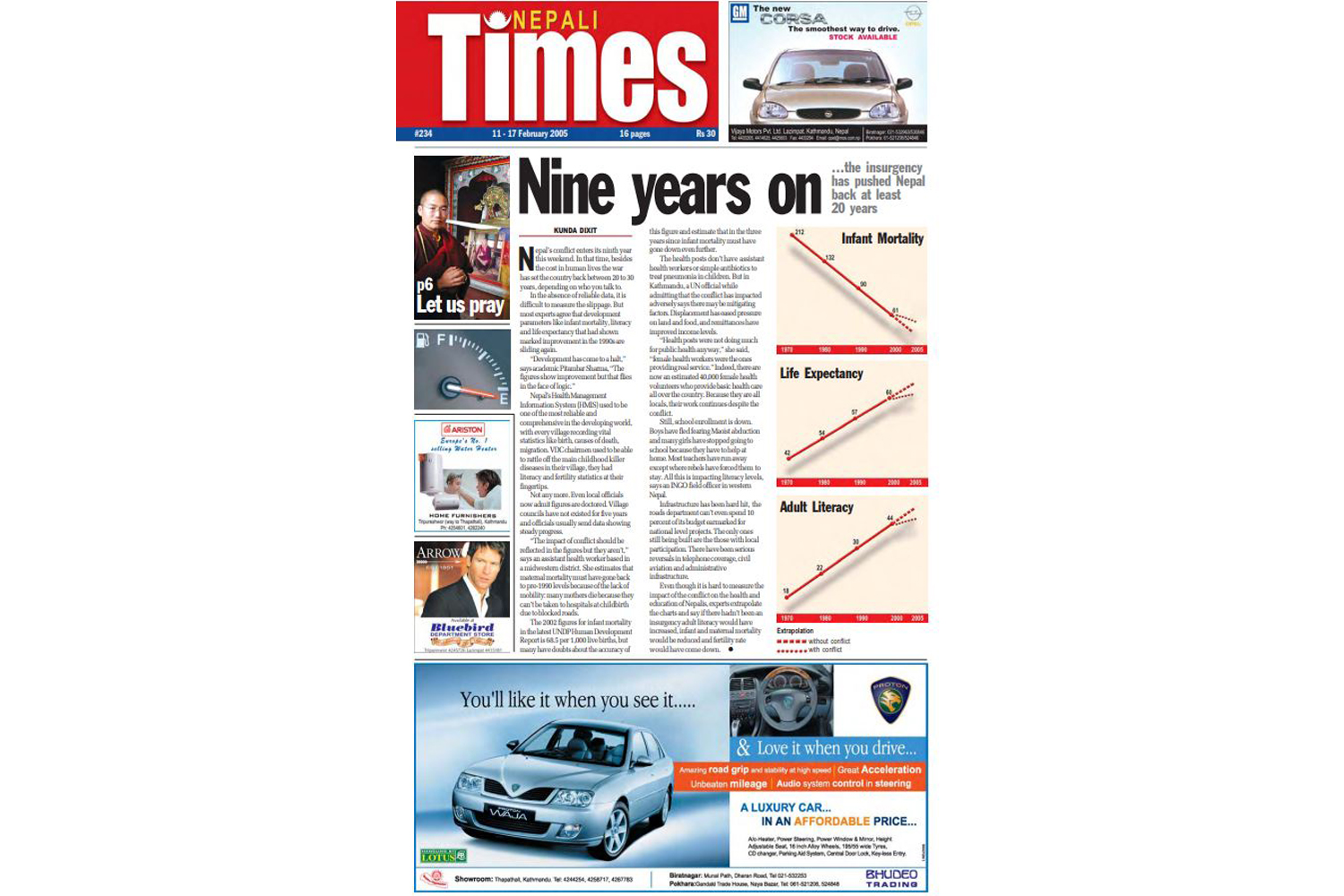
Back in the 2000s, during the height of the Maoist war, Nepal was not synonymous with growth: everything was plummeting, from the GDP and…
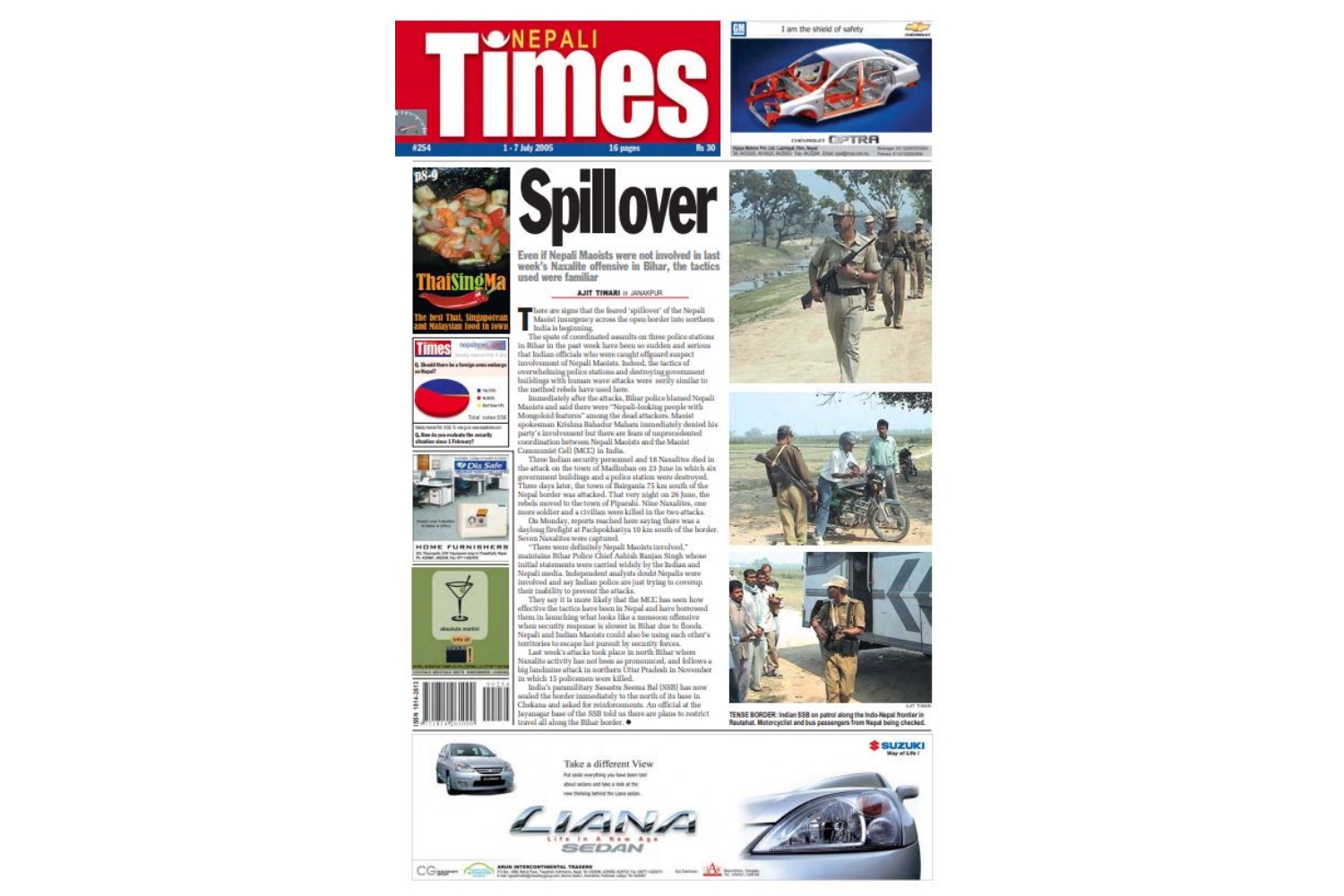
Public Opinion Matters
Twenty years ago this week, the Nepali Times editorial was about the politicians, Maoists and the king not respecting public opinion. It is not…
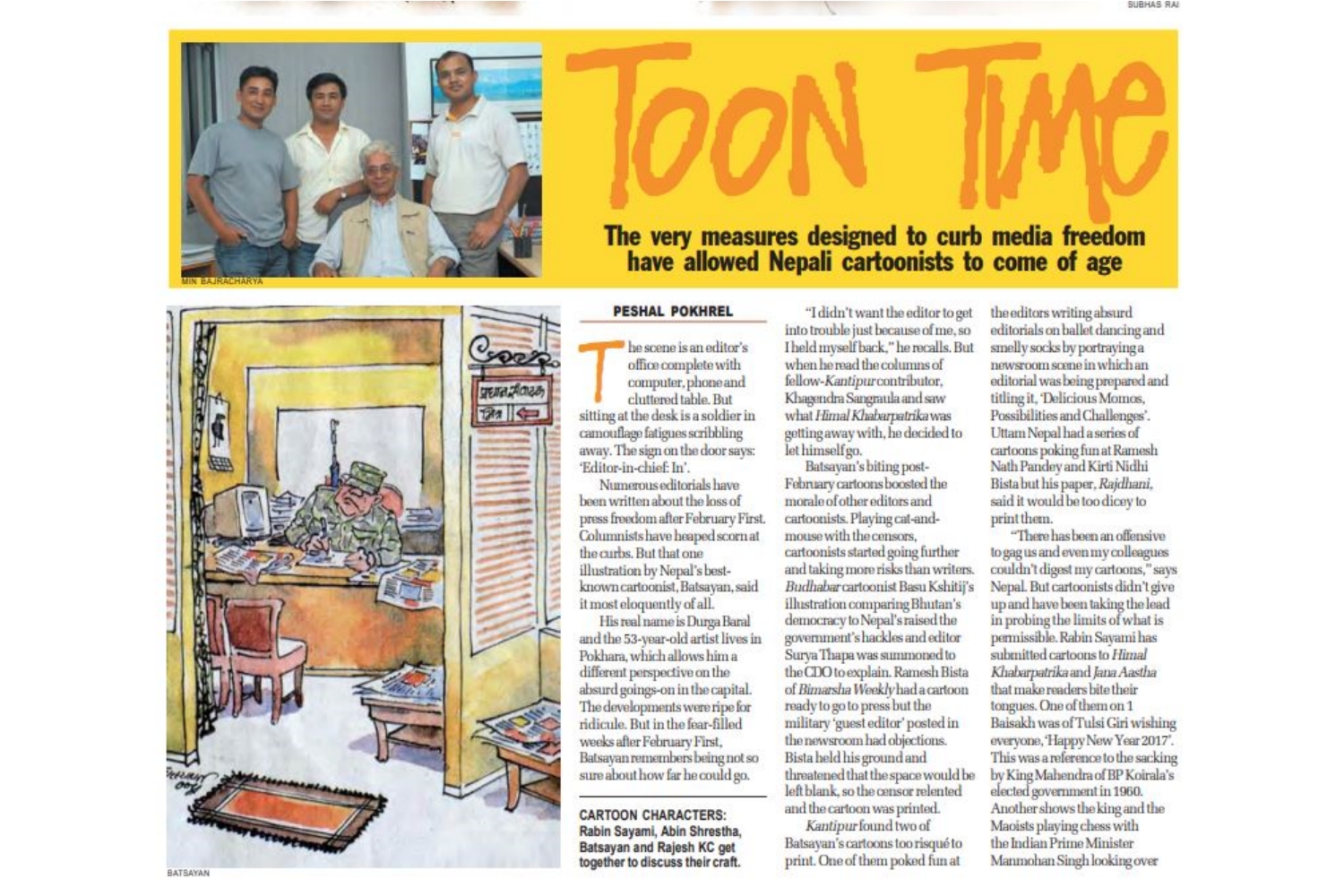
Toon Time
Post 1 February coup by king Gyanendra, soldiers were posted in newsrooms of major publications, directed to spike news critical of the…
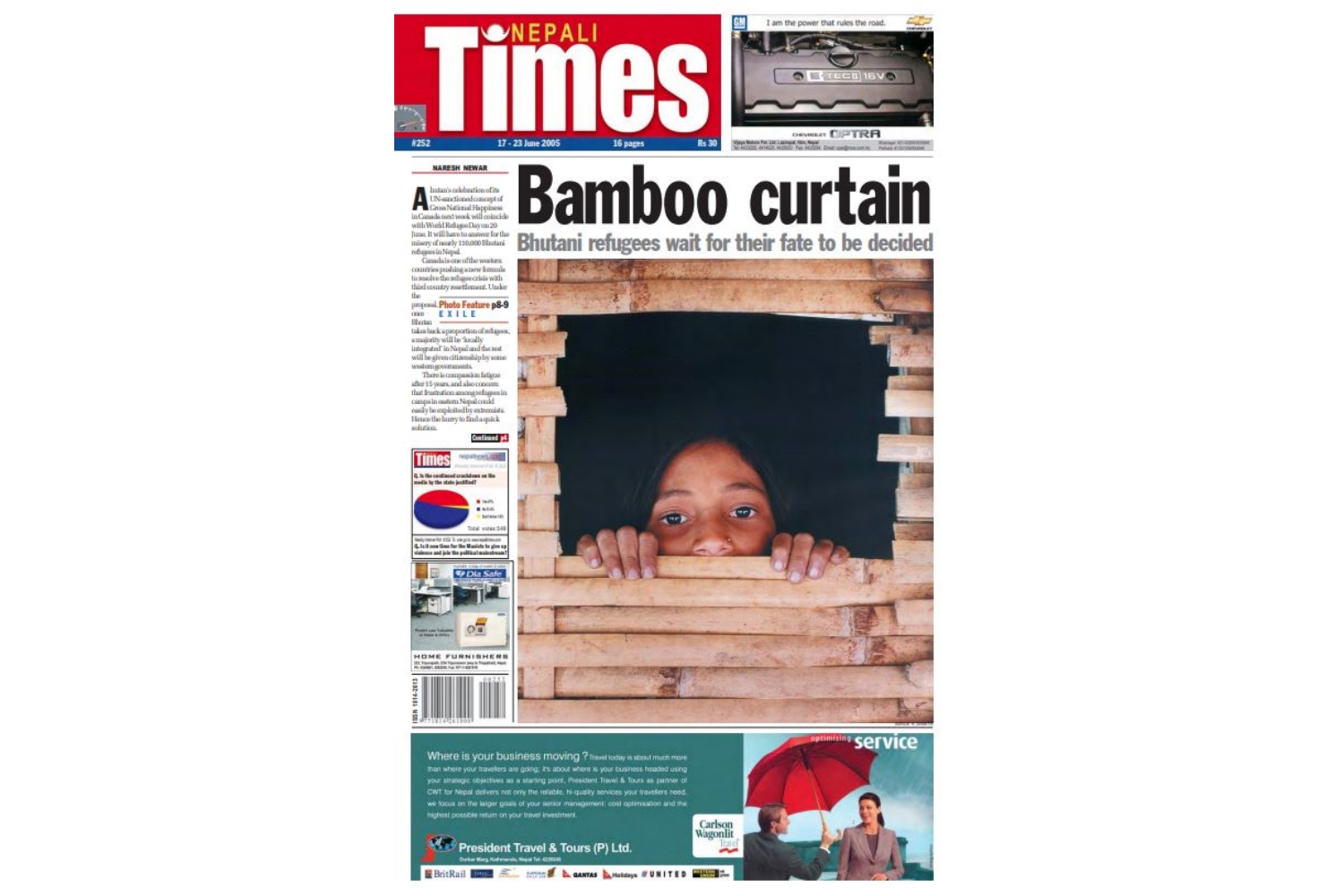
Bhutan Refugees
These two words have a very negative connotation in Nepal today because of the scam that exposed top-tier bureaucrats and politicians in issuing…
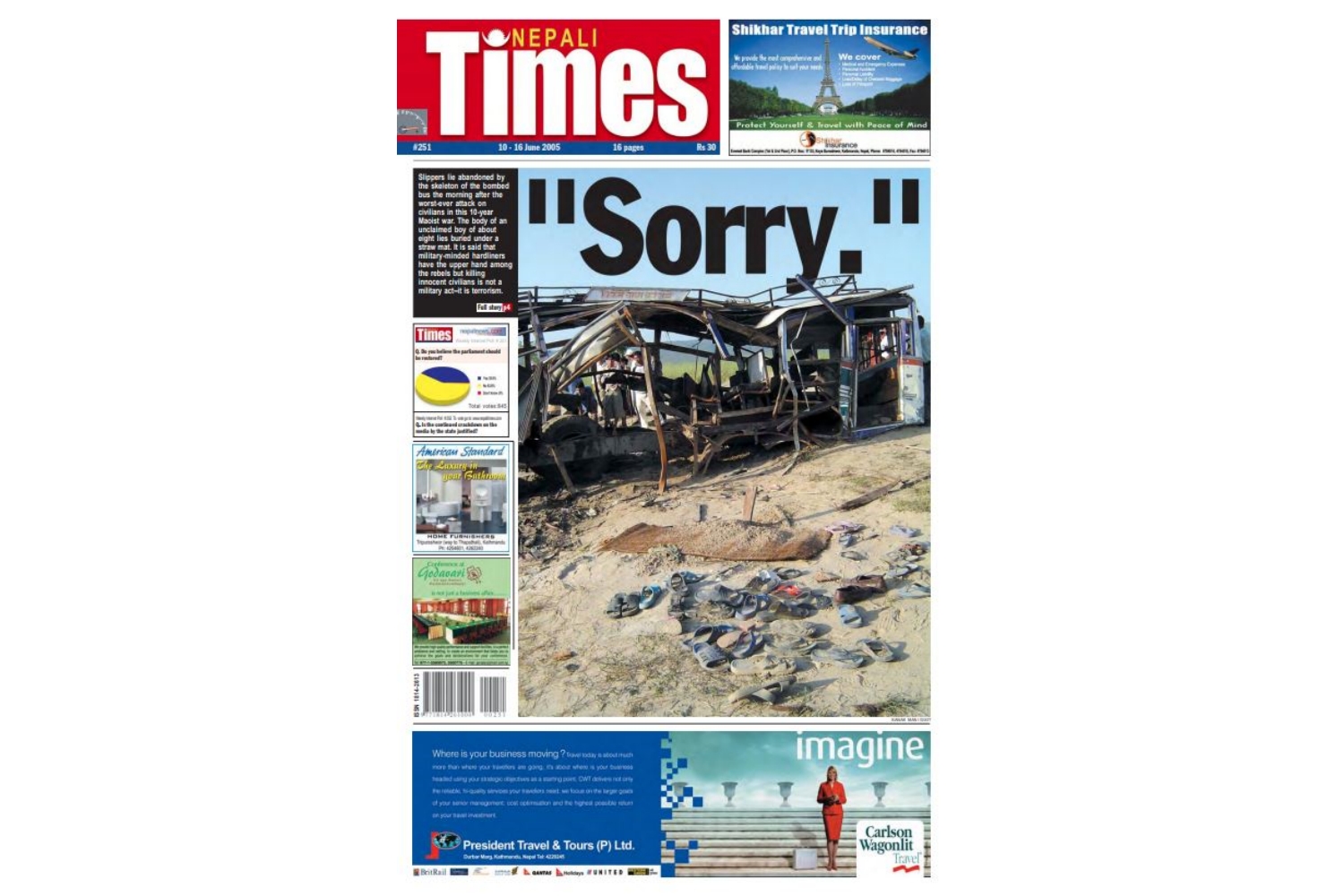
Budget then, budget now
Every year there is much anticipation ahead of the annual budget. But chronic underspending aided by corruption and cronyism is not new and was…
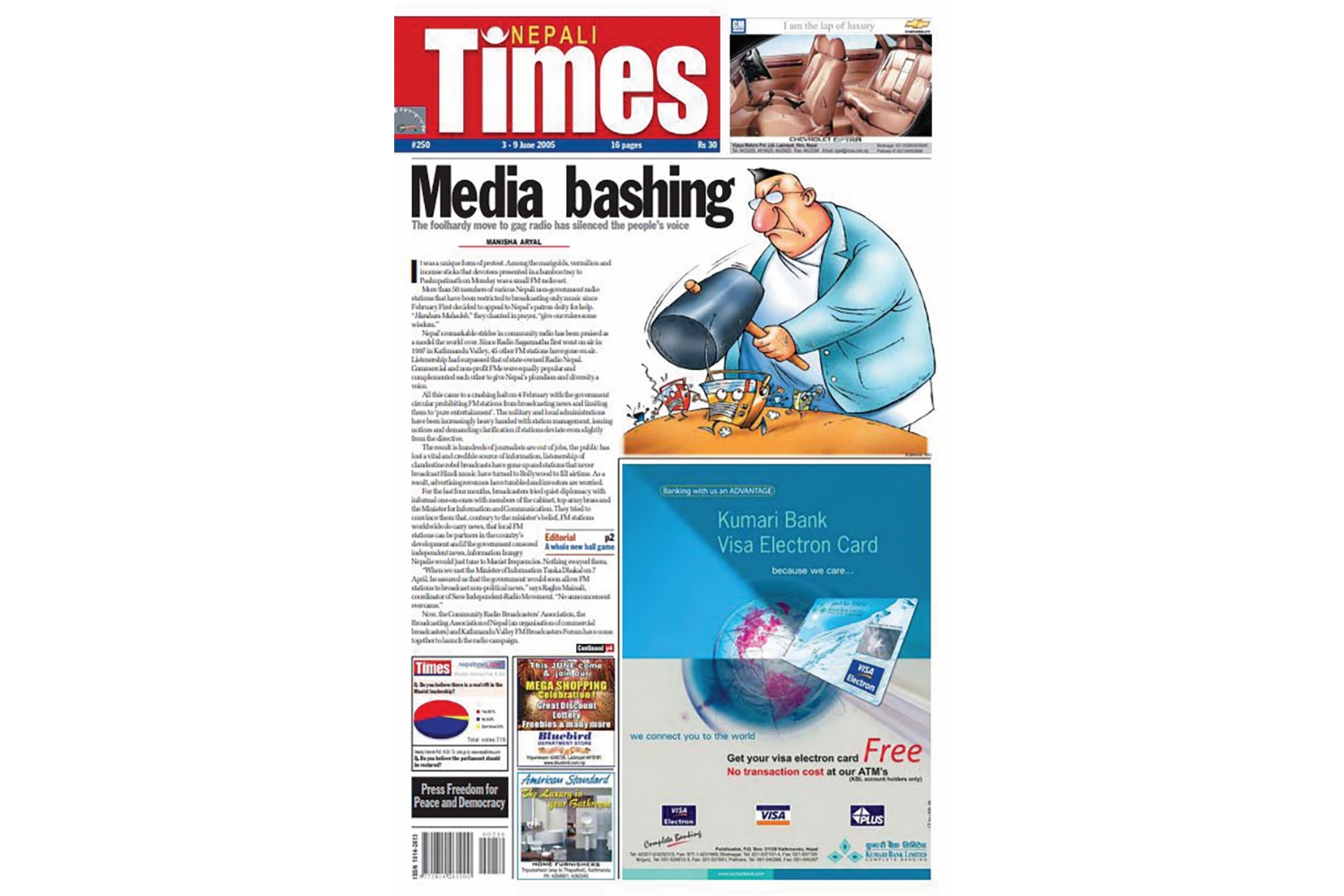
Maneuvering Censorship
Radio Sagarmatha was set up in the late 1990s, ushering in Nepal's community radio revolution. FM radios were however heavily censored following…
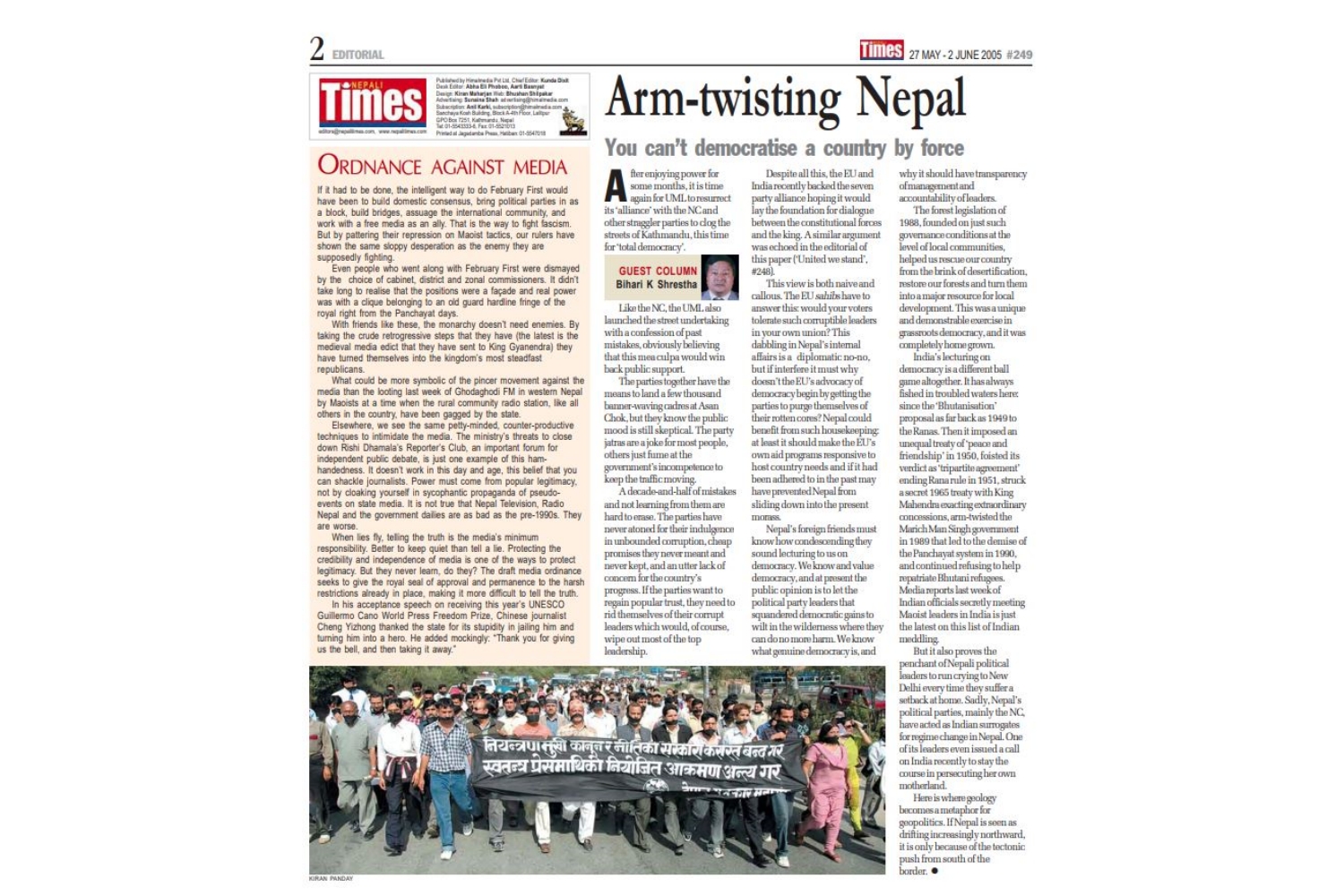
Gagging the Press
Kathmandu is the regional hub for freedom and expression today but it wasn't always so. One of the strictest media censorship was after king…
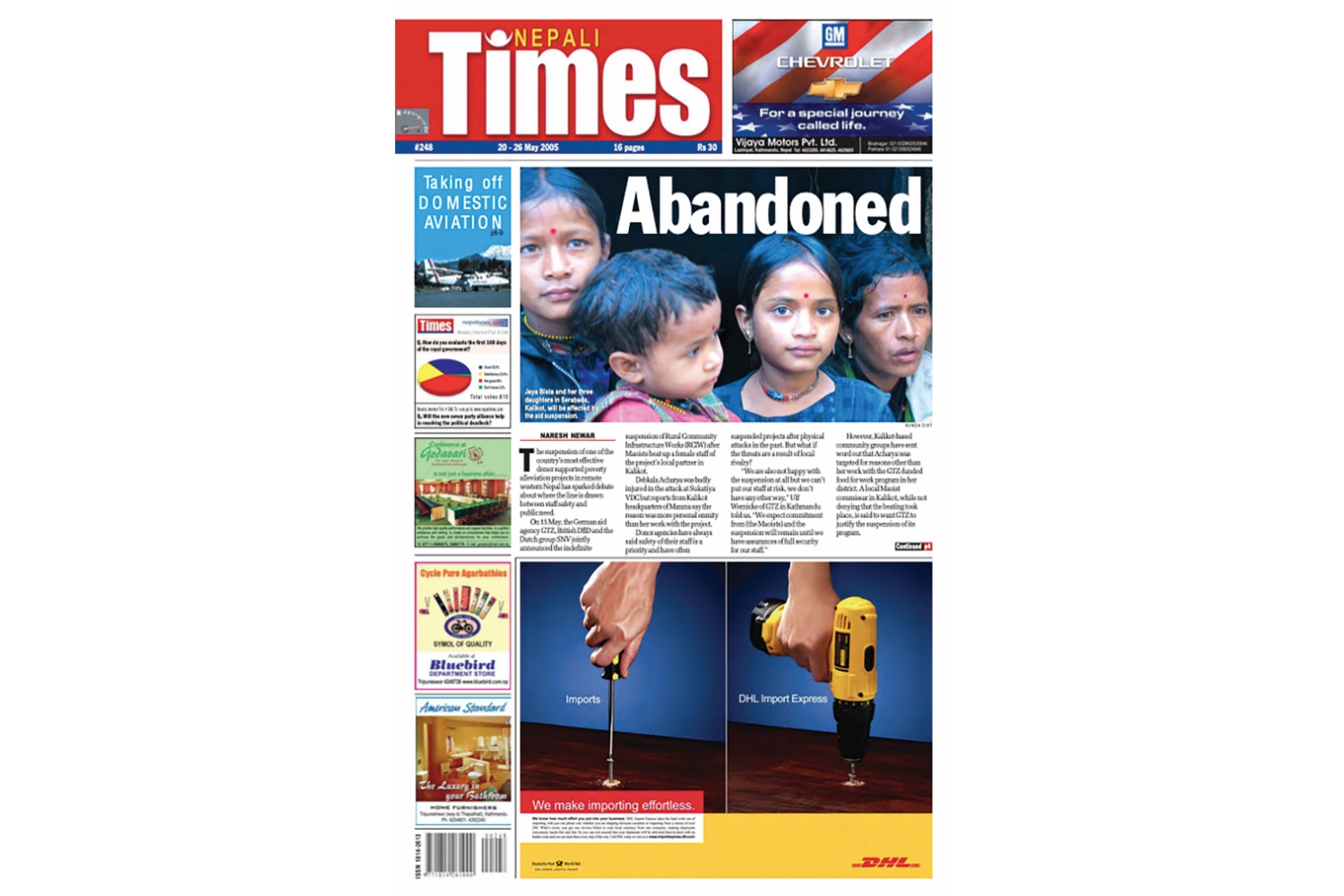
Politically Corrected News
For once, we are dedicating this space not to rehash how Nepali politics and its players haven’t changed for the past 20 years. Enjoy this Under…
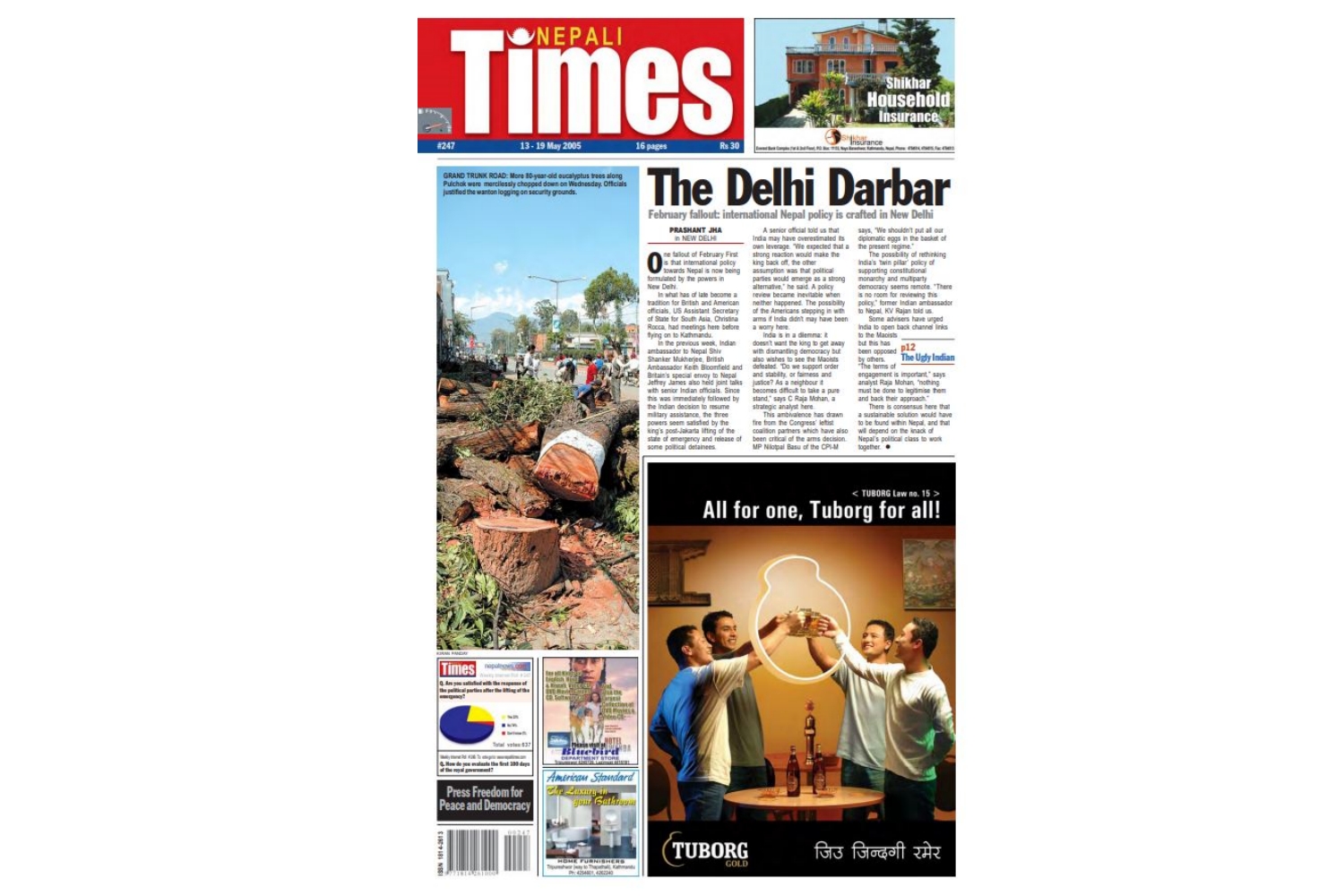
100 days of solitude
One hundred days after king Gyanendra’s 1 February 2005 coup, and two weeks after its consequent state of emergency was lifted, Nepal’s…
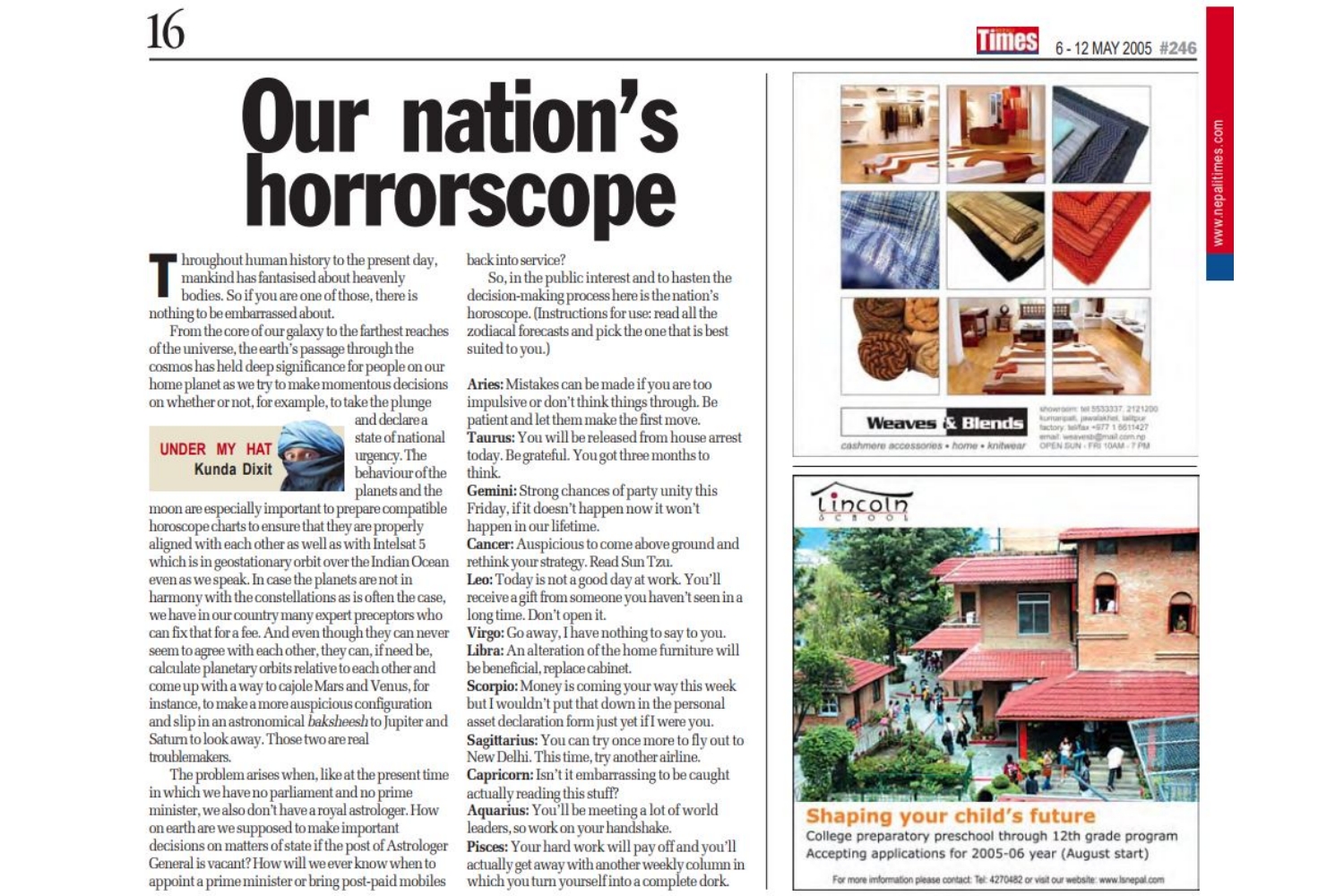
Written in the stars
We are a nation obsessed with astrology. From births and deaths to weddings and even nation building, everything is guided by planets and moons…
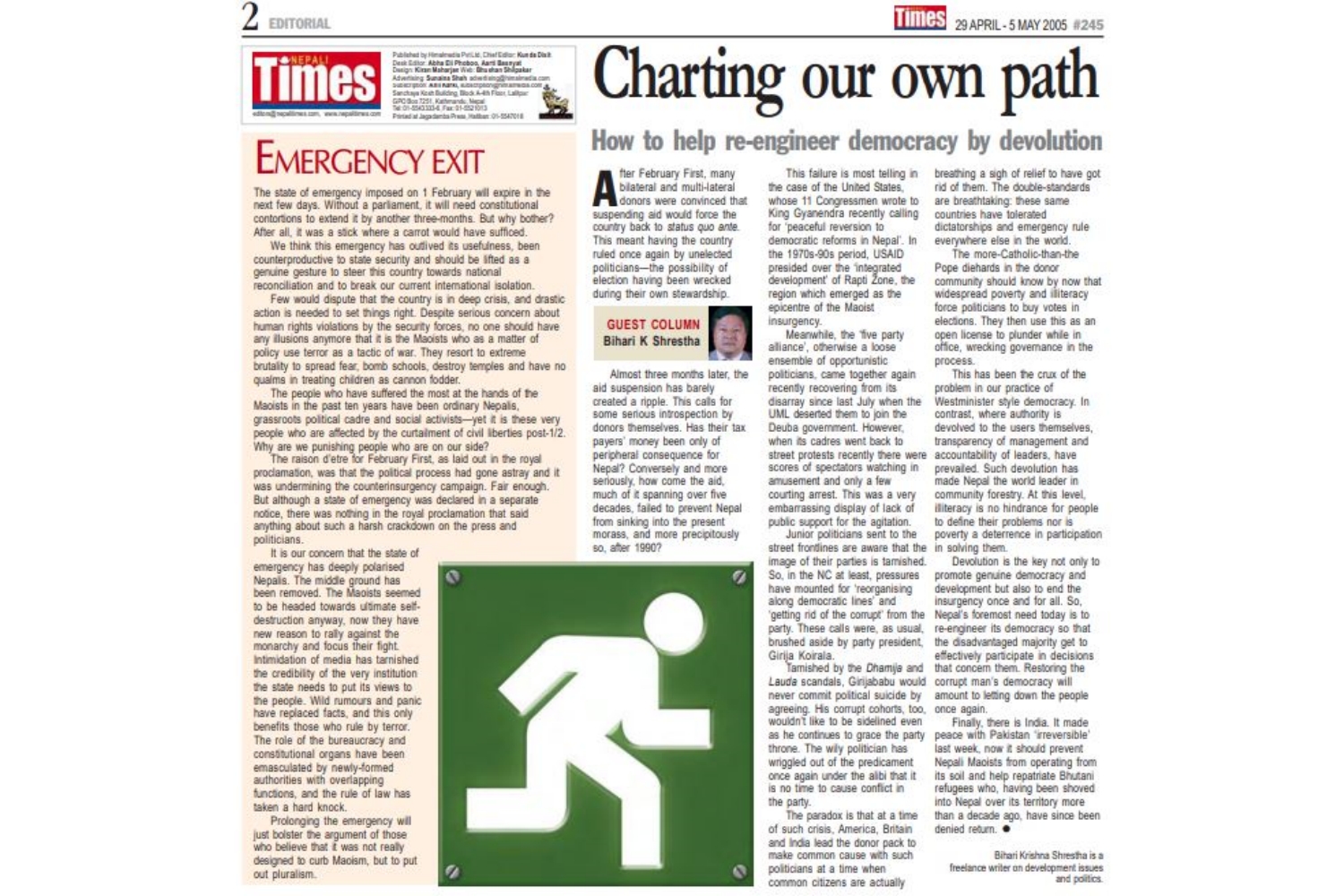
Shooting the messenger
The state of emergency imposed on 1 February 2005 when King Gyanendra staged a coup was coming to an end and we wrote that the emergency had…

Media in Crisis
Twenty years ago this week, we interviewed Anne Cooper, then-executive director of the New York-based Committee to Protect Journalists (CPJ).…
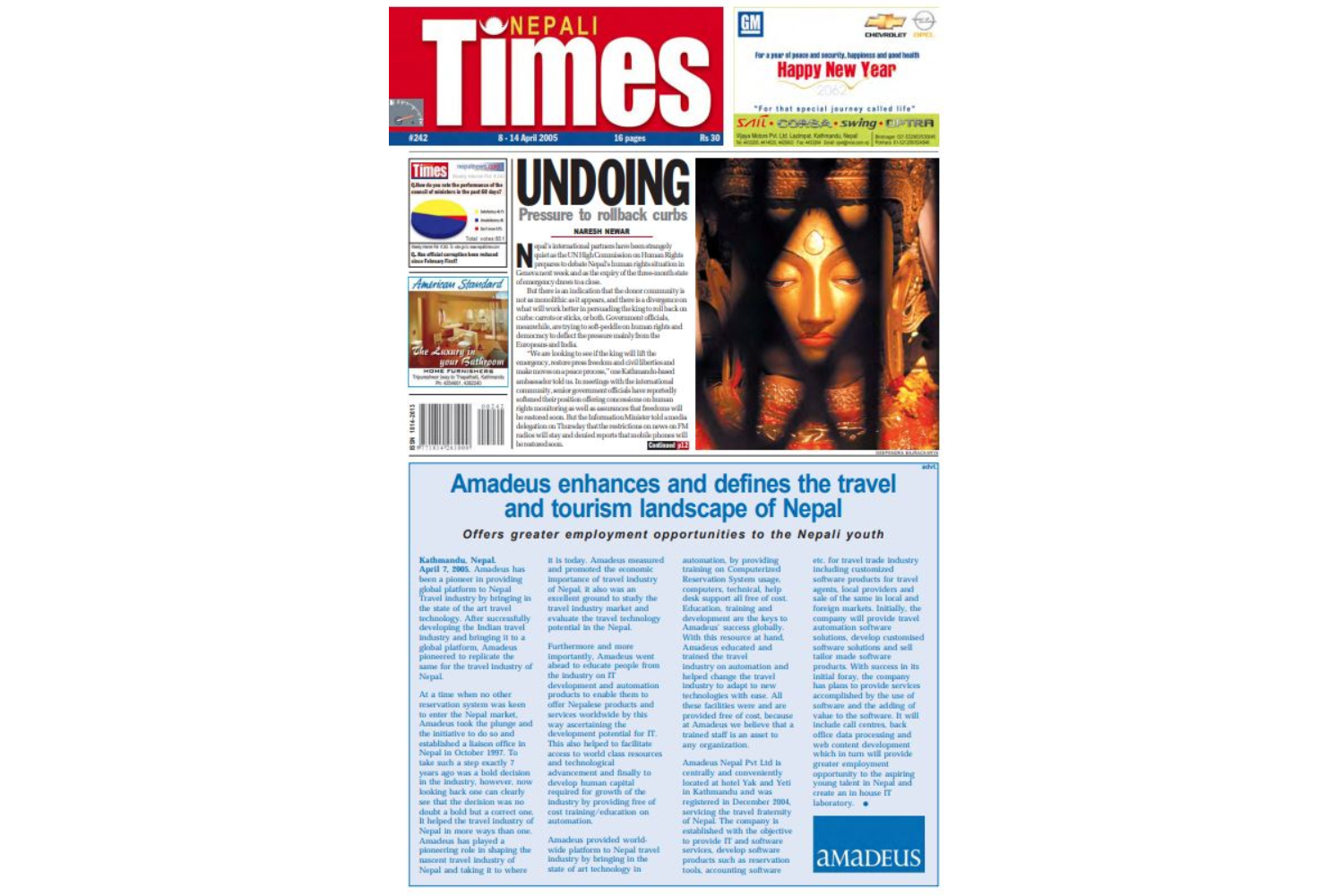
New Year 2062
As we mark Nepali New Year 2082 next week, take a look back at our editorial 20 years ago this week where we said that we need both peace and…

Who’ll Blink First?
Two decades after Gyanendra’s 1 February 2005 coup that was the beginning of the end of the monarchy in Nepal, royalists want to reinstate a…
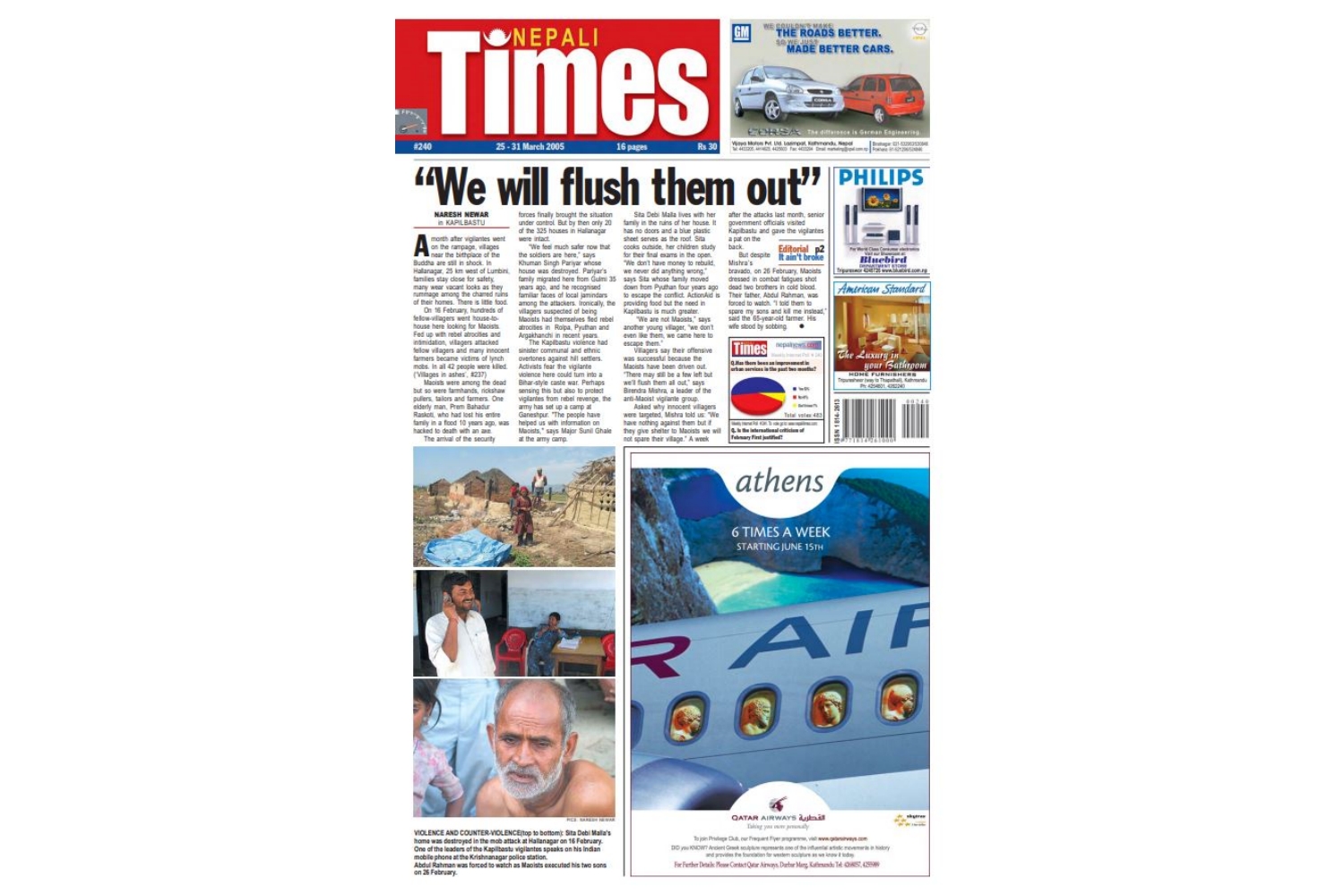
Looking for problems
Nearly two months after king Gyanendra's 1 February 2005 coup, Nepal began to feel its economic impact: domestic production slowed down, budget…
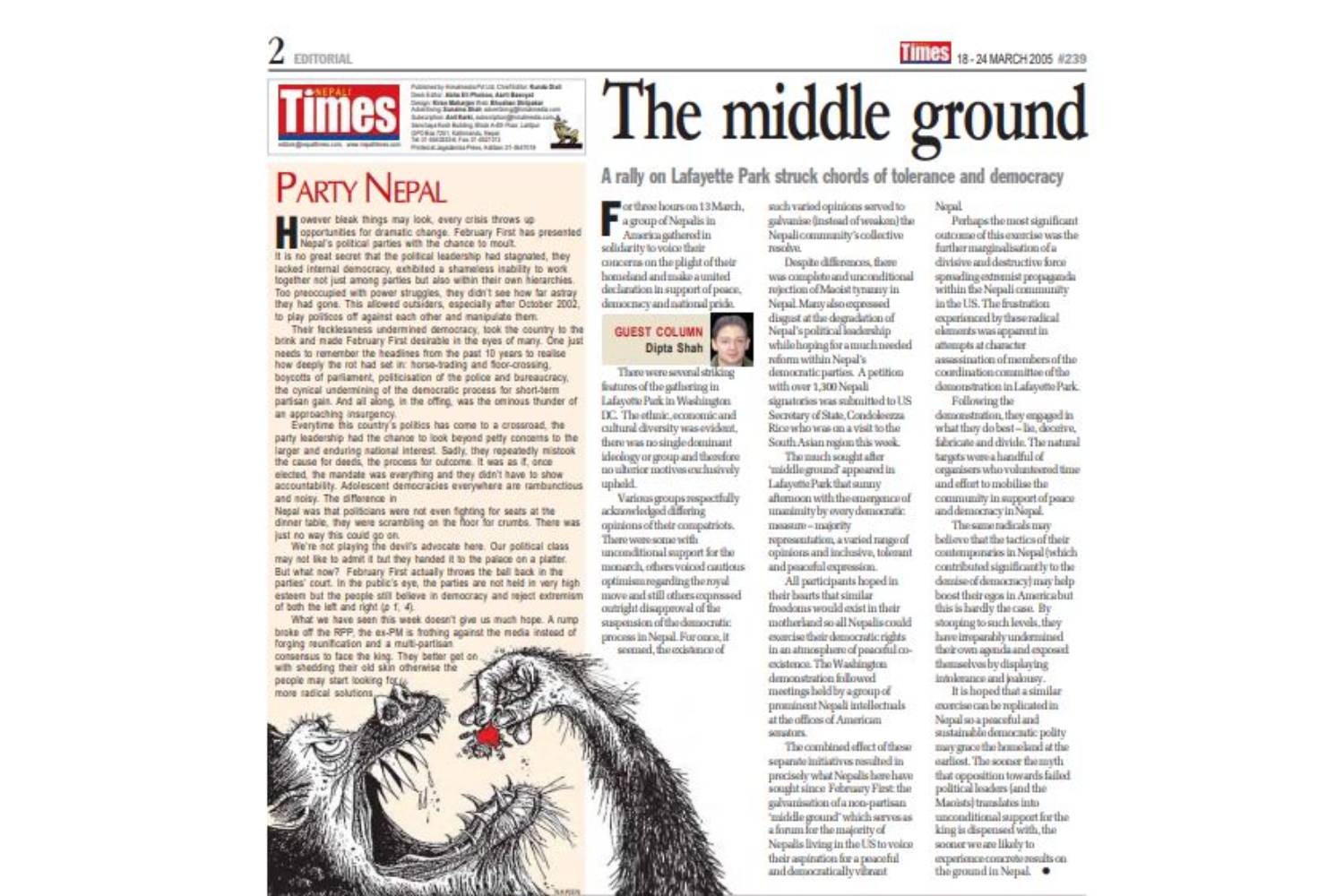
Same old story
This editorial published 20 years ago this week might as well have been written today. Party leaders too busy with power struggles just don’t…
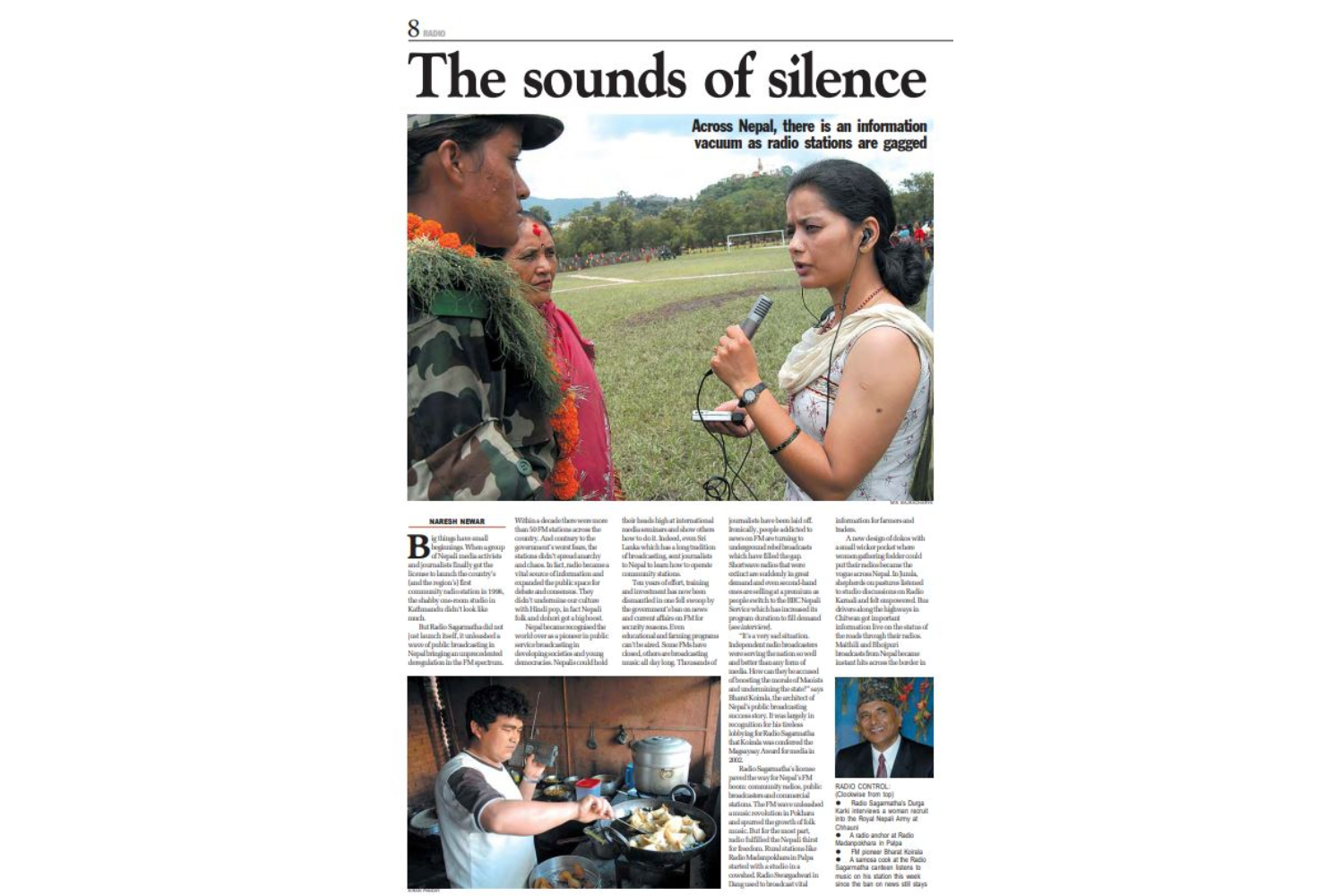
180 degree turn
Nepalis disillusioned with the current crop of leaders took to the streets this week rallying for Gyanendra, the same king who staged a coup and…

Remittance Economy
Twenty years ago this week, we wrote about the growing contribution of migrant workers to the national economy. Things have only gone south…
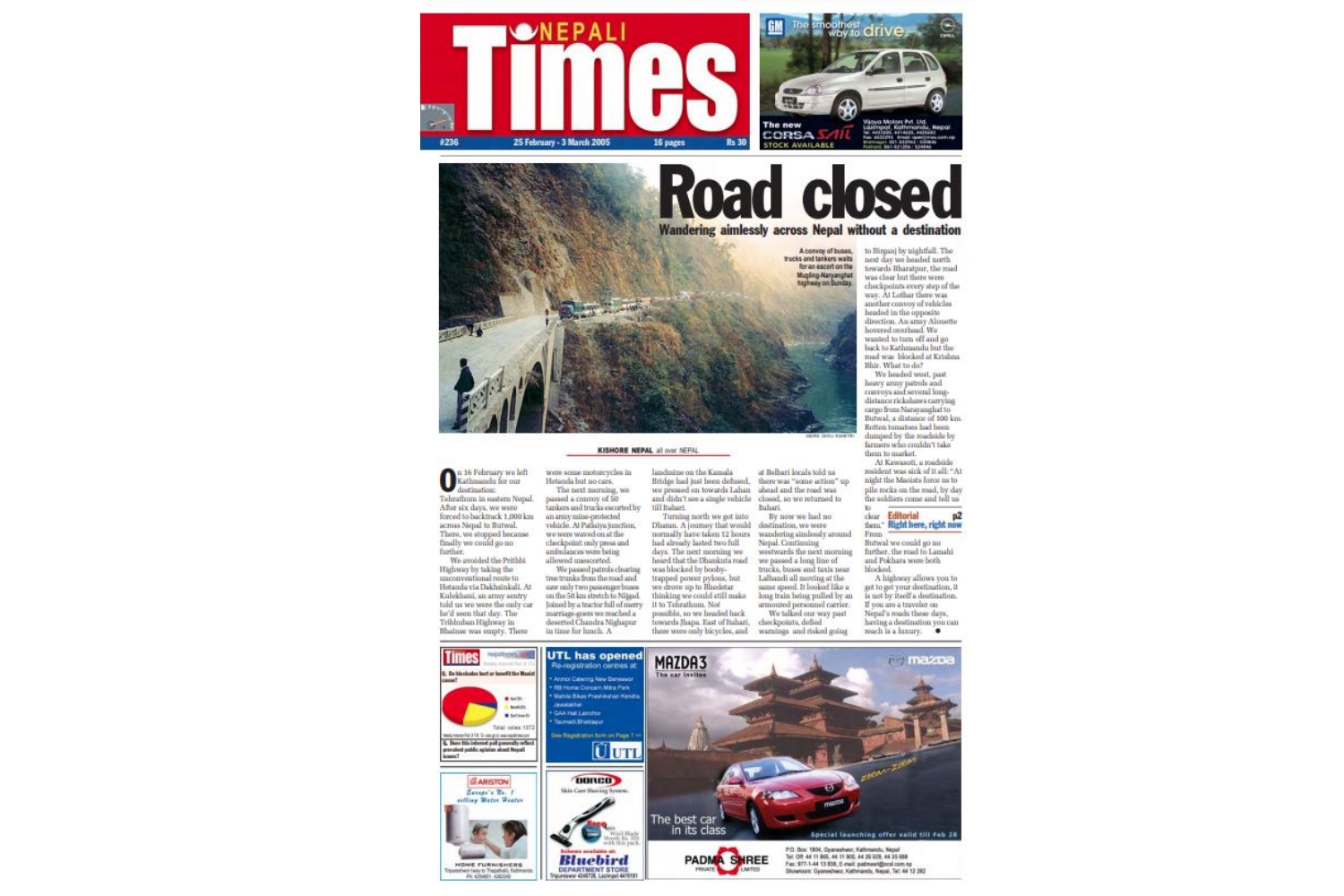
Rebels without a cause
Nearly a month after the 1 February 2005 coup, Nepali Times reported how the Maoists were cutting off towns and highways. Tens of thousands of…
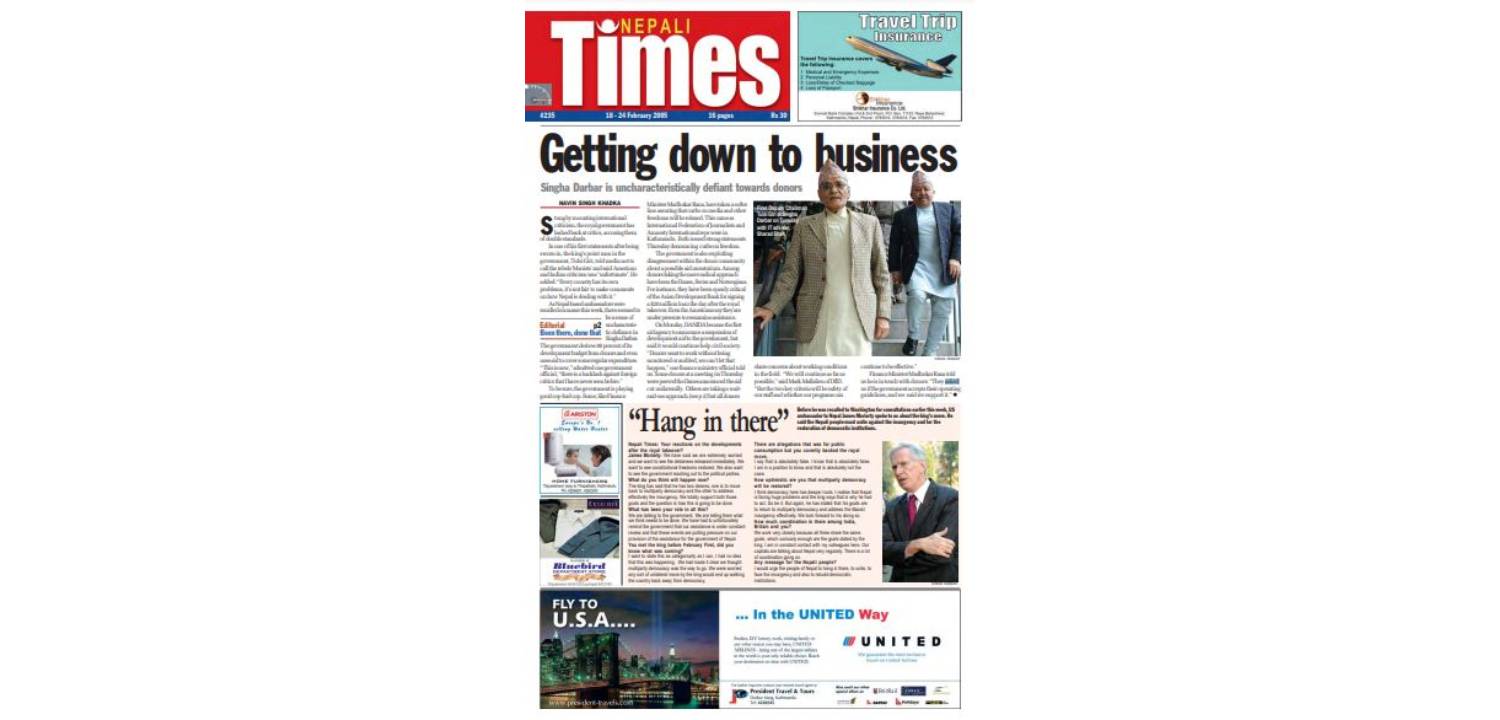
“Hang in there”
A week after the 1 February 2005 coup by King Gyanendra, Nepali Times interviewed American Ambassador to Nepal James Moriarty. He urged the…
The Melamchi Mirage
Twenty years ago this week, a new Chinese contractor was hired to work on the Melamchi project, and we wrote then that when completed in 2010,…
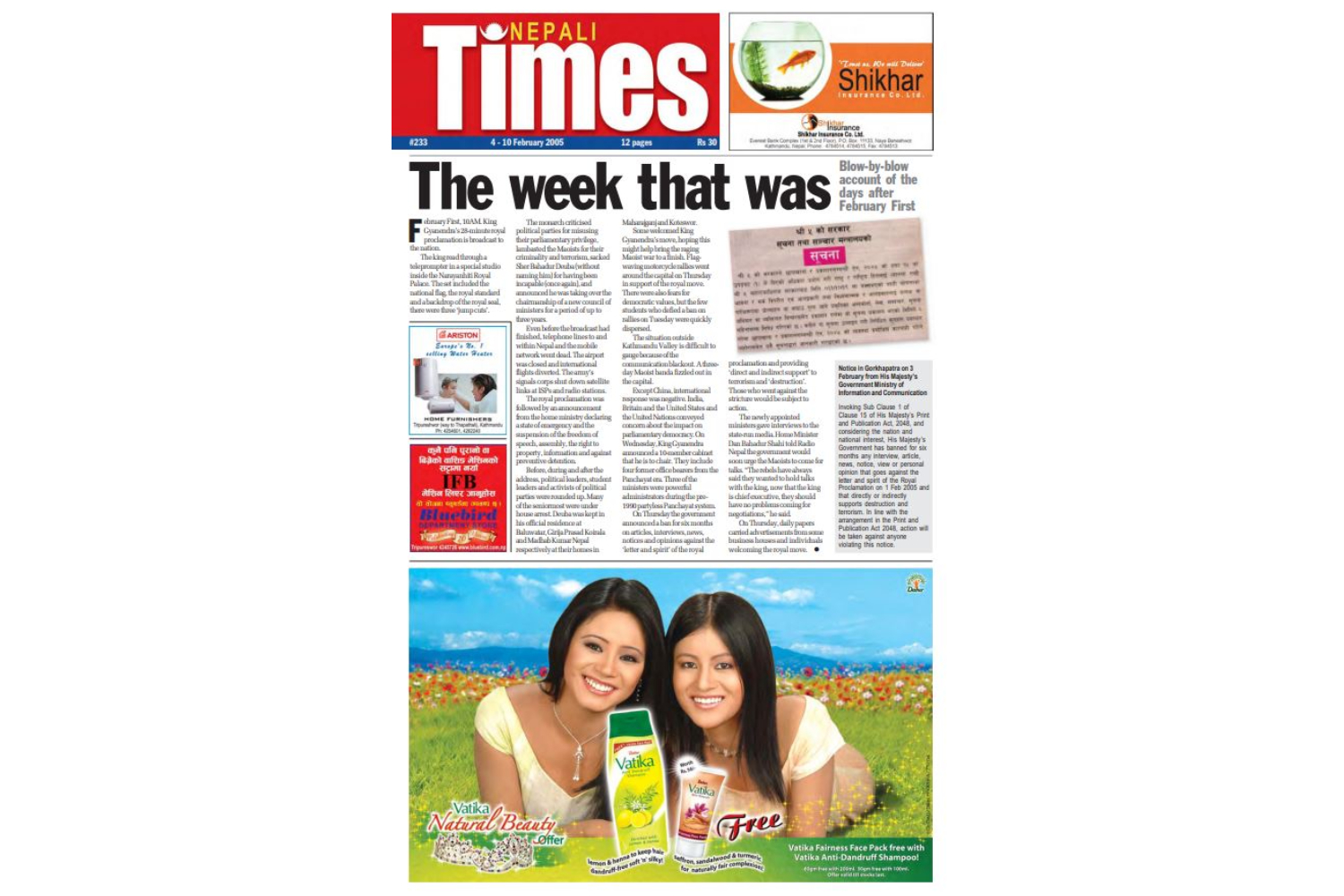
1 February 2005
Last week, the government introduced a contentious Social Media Bill that seeks to muzzle freedom of expression. It was the same week 20 years…
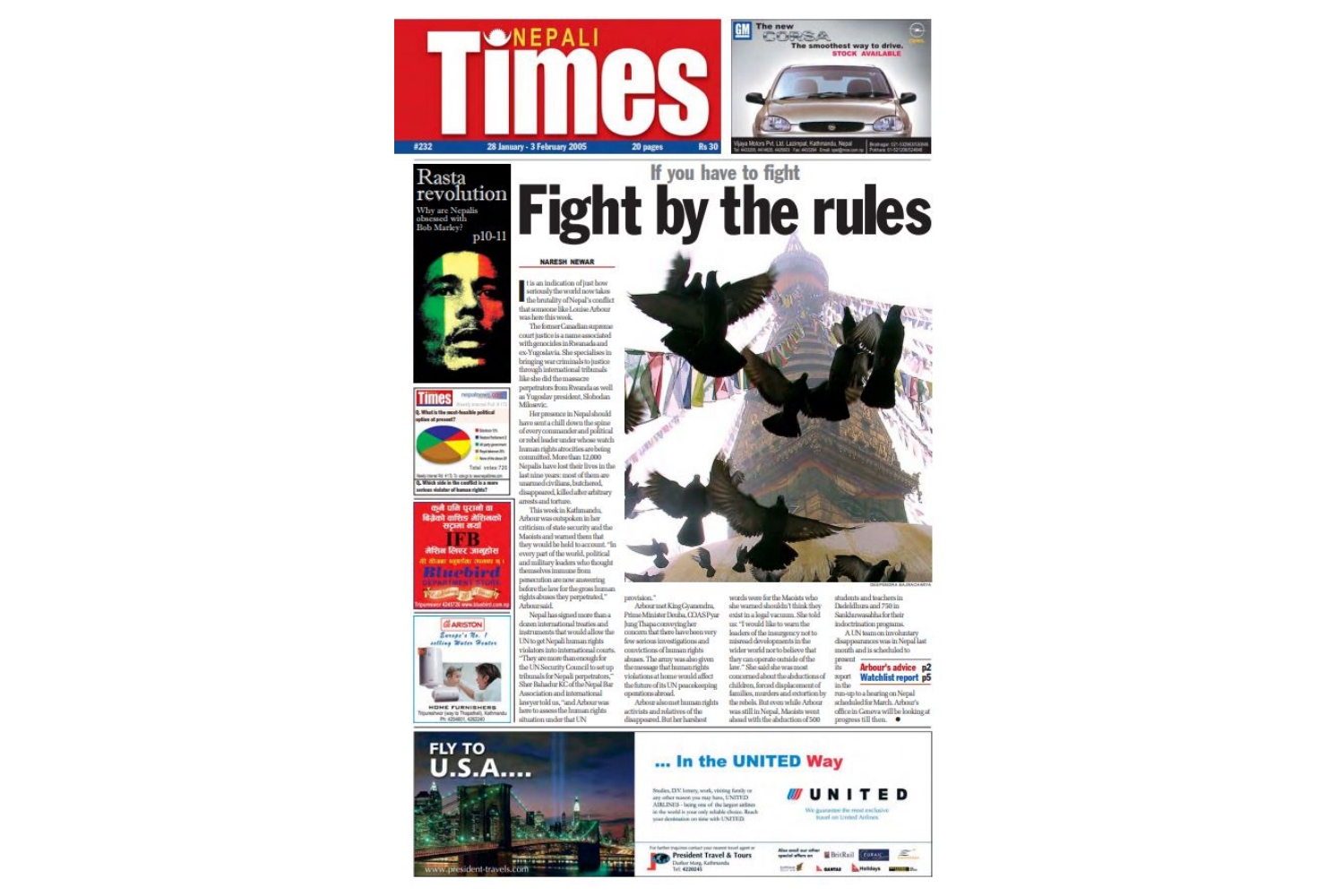
1 February
Twenty years ago, on 1 February 2005, King Gyanendra staged an army-backed coup. A few days before that, we had written in an editorial that…